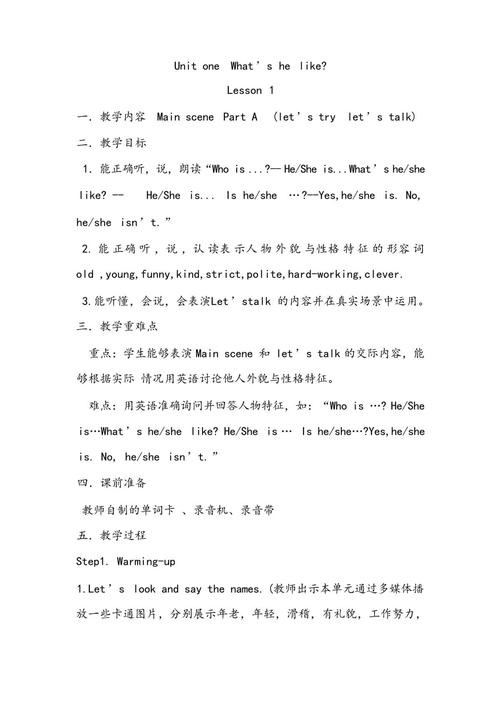
人教版小学英语(PEP Primary English)是中国大陆使用最广泛的小学英语教材之一,其教学设计通常遵循“整体设计,分步实施”的原则,强调情境性、趣味性、交际性和任务性。
(图片来源网络,侵删)
教学设计核心理念与原则
- 以学生为中心: 活动设计要符合小学生的年龄、心理特点和认知规律,激发他们的学习兴趣和主动性。
- 情境教学法: 将语言知识融入到学生熟悉或感兴趣的生活情境中,让学生在“用”中学,在“学”中用。
- 任务型教学法: 设计明确的、有意义的任务,让学生在完成任务的过程中自然地运用语言,培养综合语言运用能力。
- 整体性原则: 将词汇、句型、对话、语音等作为一个整体来设计教学,而不是孤立地教授知识点。
- 趣味性与多样性: 采用游戏、歌曲、歌谣、TPR(全身反应法)、绘画等多种形式,保持课堂的活力和吸引力。
教学设计基本框架(模板)
一份完整的教学设计通常包含以下几个部分:
| 教学设计基本框架 | 内容要点说明 |
|---|---|
| 教学基本信息 | - 课题: Unit X Part A/B Let's learn / Let's talk - 年级: Grade X - 课时: Period 1 / 2 - 课型: 新授课 / 巩固课 / 复习课 - 教材版本: 人教版 PEP Primary English - 授课教师: XXX |
| 教学分析 | - 教材分析: 本课内容在整个单元、整册书乃至整个学段中的地位和作用,它承上启下的关系是什么? - 学情分析: 学生的现有知识水平、学习兴趣、学习习惯、认知特点以及可能遇到的困难。 - 教学目标: 这是设计的核心,应从三个维度来写: 1. 知识与技能: 学生能听、说、认读哪些单词?能听、说、运用哪些句型?能完成什么任务? 2. 过程与方法: 学生通过什么方式学习(如:游戏、小组合作、情境表演等)?培养什么学习策略(如:观察、模仿、合作)? 3. 情感态度与价值观: 培养学生什么样的学习兴趣?渗透什么样的文化意识或情感教育(如:热爱家庭、乐于助人、养成良好习惯)? - 教学重难点: 1. 教学重点: 本课必须掌握的核心语言知识和技能。 2. 教学难点: 学生在学习过程中可能感到困难或容易混淆的地方,如发音、某个句型的运用、文化差异等。 |
| 教学准备 | - 教师准备: PPT课件、单词卡片、图片、实物、音频、视频、奖励用的小贴纸/星星等。 - 学生准备: 课本、练习本、铅笔。 |
| 教学过程 | 这是教学设计的主体,通常按照“热身-新知呈现-趣味操练-巩固应用-总结拓展”的步骤来组织。 1. 热身/导入: 活跃课堂气氛,复习旧知,引出新课主题,常用歌曲、歌谣、游戏、Free talk等。 2. 新知呈现: 创设情境,直观、形象地呈现本课的核心词汇和句型,方法有:看图说话、TPR、情景表演、多媒体展示等。 3. 趣味操练: 通过形式多样的游戏和活动,让学生反复练习新知识,达到熟练掌握的程度,原则是“由易到难,由机械到意义”,常用游戏有:快速反应、大小声、开火车、寻宝、小组竞赛等。 4. 巩固应用: 创设更接近真实生活的情境,让学生在完成任务的过程中综合运用所学语言,常用活动有:角色扮演、小组调查、制作海报、编对话等。 5. 总结与拓展: 回顾本课所学内容,进行情感升华,并布置与生活相关的作业,将课堂学习延伸到课外。 |
| 板书设计 | - 设计要简洁、清晰、有条理,突出重点,通常包含课题、核心词汇、核心句型、简笔画或图片。 |
| 作业设计 | - 基础性作业: 抄写单词、朗读课文等。 - 拓展性/实践性作业: 和家人用英语对话、画一幅画并用英语描述、唱一首歌给家人听等。 |
| 教学反思 | - 课后填写: 记录本节课的成功之处、不足之处、学生的反应以及改进的想法,这是教师专业成长的重要环节。 |
具体教学设计案例
下面以人教版三年级上册 Unit 4 We love animals Part A Let's learn 为例,展示一份完整的教学设计。
人教版小学英语三年级上册 Unit 4 We love animals Part A Let's learn 教学设计
教学基本信息
- 课题: Unit 4 We love animals Part A Let's learn
- 年级: Grade 3
- 课时: Period 1
- 课型: 新授课
- 教材版本: 人民教育出版社 PEP Primary English
教学分析
(图片来源网络,侵删)
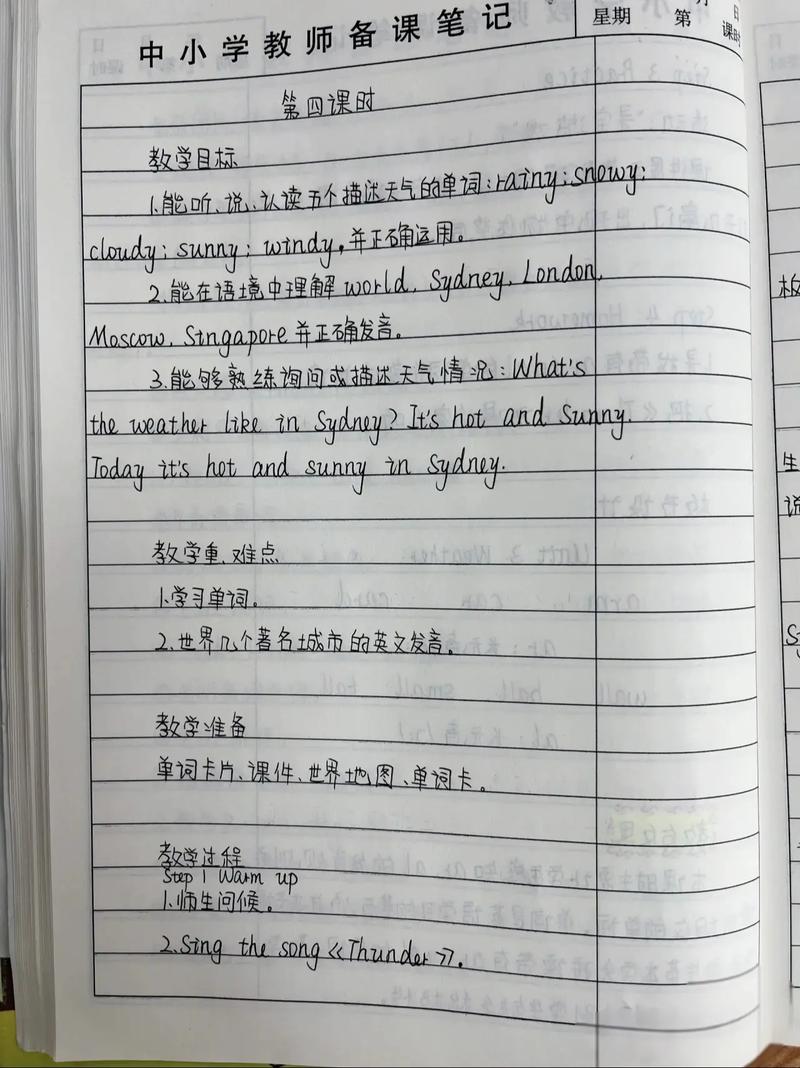
- 教材分析: 本课时是第四单元的第一课时,主要学习四种动物单词(duck, pig, bear, cat)和句型 "What's this? — It's a...",这是学生首次系统学习动物类词汇,并掌握询问和回答物品名称的句型,为后续学习其他动物和更复杂的对话奠定基础。
- 学情分析: 三年级学生活泼好动,对动物充满好奇心,喜欢直观、有趣、互动性强的学习方式,他们已经学习了26个字母和一些简单的问候语,具备初步的听、说能力,但注意力的持久性较差。
- 教学目标:
- 知识与技能:
- 能听、说、认读单词:duck, pig, bear, cat。
- 能听、说、运用句型:— What's this? — It's a... 来询问和回答动物的名称。
- 能正确模仿录音中的语音语调。
- 过程与方法:
- 通过TPR、游戏、小组合作等方式,在情境中感知、模仿和运用语言。
- 培养学生观察、倾听和合作学习的能力。
- 情感态度与价值观:
- 培养学生热爱动物、与动物和谐相处的情感。
- 在活动中体验学习英语的乐趣,增强学习自信心。
- 知识与技能:
- 教学重难点:
- 教学重点: 四个动物单词(duck, pig, bear, cat)的认读和句型 "What's this? — It's a..." 的运用。
- 教学难点: 单词 "bear" 的发音;以及在实际情境中灵活运用句型进行问答。
教学准备
- 教师准备: PPT课件、动物单词卡片、动物头饰、动物玩偶或图片、录音机、奖励用的小星星。
- 学生准备: 英语课本、练习本。
教学过程
| 教学环节 | 教师活动 | 学生活动 | 设计意图 |
|---|---|---|---|
| Step 1: Warm-up & Lead-in (热身与导入) | Greetings: T: Hello, boys and girls! Ss: Hello, teacher! 2. Sing a song: "Hello!" 3. Play a guessing game: T: I have a riddle. It's small. It's white. It can jump. What is it? (Ss guess: rabbit). 4. Lead-in: T: You like rabbits. Animals are our good friends. Today, let's meet more animals. (PPT shows the topic: We love animals) |
Greet the teacher. 2. Sing and dance. 3. Guess the animal and answer "It's a rabbit!". 4. Look at the screen and know the topic. |
通过歌曲和游戏活跃课堂气氛,复习旧知,并自然地引出“动物”这一主题,激发学生的学习兴趣。 |
| Step 2: Presentation (新知呈现) | Show a duck: T: (Show a duck picture or toy) Look! What's this? Listen. (Play the sound "quack-quack"). It's a duck. (Teach the word "duck" with clear pronunciation, show the card, and lead students to read it.) 2. Show a pig: T: (Show a pig picture) What's this? (Make the sound "oink-oink"). It's a pig. (Teach "pig".) 3. Show a bear: T: (Show a bear picture) Look at this big animal. What's this? (Play the sound). It's a bear. (Teach "bear", pay attention to the /b/ and /eə/ sound.) 4. Show a cat: T: (Show a cat picture) It's a small and cute animal. What's this? (Meow). It's a cat. (Teach "cat".) 5. Teach the dialogue: T: (Point to the duck) What's this? (Ask a student). Ss: It's a duck. T: Yes! What's this? (Ask another student, pointing to the pig). Ss: It's a pig. ... (Present the dialogue pattern: — What's this? — It's a...) |
Look, listen, and observe. 2. Listen to the teacher and repeat the words: "duck", "pig", "bear", "cat". 3. Follow the teacher's gestures and practice the pronunciation. 4. Try to answer the teacher's question "What's this?" with "It's a...". |
利用图片、声音和实物,创设真实情境,直观呈现新单词和句型,遵循“音、形、义”相结合的原则,加深学生的理解和记忆。 |
| Step 3: Practice (趣味操练) | Game 1: Listen and do (TPR): T: Act like a duck! Ss: (Act like a duck and say "quack-quack"). T: Act like a pig! ... 2. Game 2: Quick Response: T: Quickly show the word cards. Ss read the words as quickly as they can. 3. Game 3: What's missing? Show four word cards, then hide one. Ss guess: "It's a..." 4. Game 4: Pair Work: Work in pairs. Ask and answer using the cards. — What's this? — It's a... |
Act and say, using their body to remember the words. 2. Read the words quickly and loudly. 3. Observe carefully and guess the missing word. 4. Practice the dialogue with their partners. |
通过一系列由易到难、形式多样的游戏,让学生在“玩”中巩固所学知识,调动多种感官参与学习,提高学习的趣味性和效率。 |
| Step 4: Consolidation & Application (巩固与应用) | "Let's meet the animals" show: - Invite some students to come to the front, wear the animal headbands. - T: (To a student with a cat headband) Hello! What's this? - S1: It's a cat. - T: Hello, cat! Nice to meet you. - S1: Nice to meet you, too. 2. Group work: In groups of four, each member chooses an animal, and they make a short dialogue. |
Volunteers wear the headbands and act as the animals. They practice the dialogue with the teacher and classmates. 2. Work in groups, choose animals, and create their own dialogues. |
创设一个“动物见面会”的表演情境,让学生在真实的语用环境中综合运用所学语言,培养其交际能力和合作精神,体验成功的喜悦。 |
| Step 5: Summary & Homework (总结与作业) | Summary: T: What animals did we meet today? (Ss: duck, pig, bear, cat.) T: Yes! We love animals! Let's be kind to them. 2. Homework: - 基础: Listen and repeat "Let's learn" for 3 times. - 拓展: Draw your favorite animal and tell your parents about it in English. "Look, Mom/Dad! It's a..." |
Review the words and the sentence pattern with the teacher. 2. Listen to the homework and write it down. |
总结本课重点,进行情感升华,作业设计分层,既巩固了课堂知识,又延伸到课外,鼓励学生在生活中运用英语。 |
板书设计
                     Unit 4 We love animals
      (中间画一个可爱的卡通笑脸)
      What's this?        It's a...
      (指向左边的动物)      (指向右边的单词)
      (贴duck的图片)      duck
      (贴pig的图片)       pig
      (贴bear的图片)      bear
      (贴cat的图片)       cat
      We love animals! ❤️
教学反思
(图片来源网络,侵删)
- (此部分在课后填写)
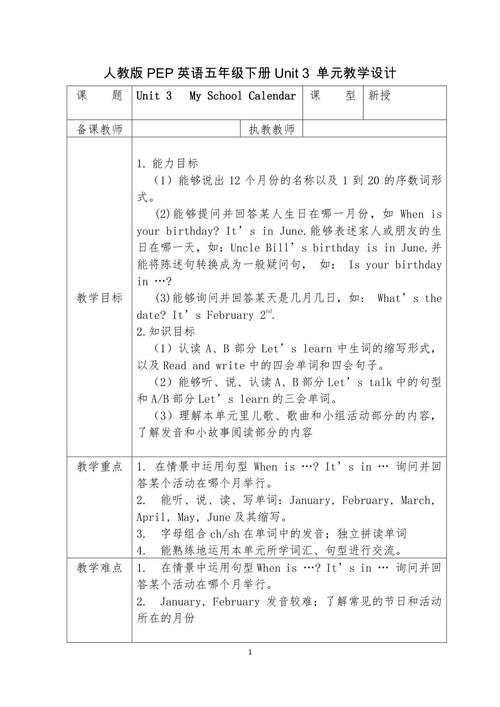
- 成功之处:游戏环节学生参与度极高,TPR活动很好地调动了课堂气氛,情境表演部分学生表现出色。
- 不足之处:个别学生在发音 "bear" 时仍有困难,需要个别辅导,部分内向学生在小组活动中不够主动。
- 改进措施:下次可以增加小组内的角色分配,确保每个学生都有任务,对于发音难点,可以设计更专门的发音练习小游戏。