小学五年级英语总复习资料
五年级英语是承上启下的关键时期,重点在于巩固三四年级的基础知识,并开始接触一些基础的语法概念和更复杂的句型,复习时,建议分模块进行,查漏补缺。
(图片来源网络,侵删)
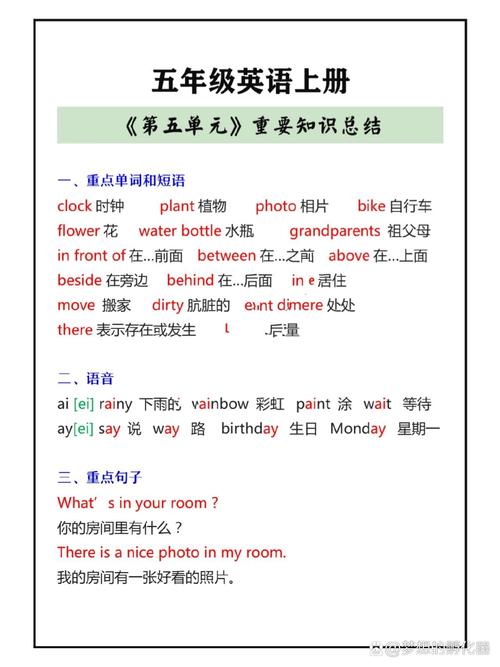
第一部分:核心词汇复习
词汇是英语的基石,五年级的词汇可以分为几大类,建议分类记忆。
人物与家庭
- 家庭成员:
father (dad),mother (mom),parents,grandfather (grandpa),grandmother (grandma),brother,sister,uncle,aunt,cousin - 职业:
teacher,student,doctor,nurse,driver,farmer,cook,singer,writer,player(运动员) - 人物描述:
- 外貌:
tall(高的),short(矮的/短的),strong(强壮的),thin(瘦的),long hair(长发),short hair(短发),big eyes(大眼睛),small eyes(小眼睛) - 性格:
kind(善良的),friendly(友好的),funny(滑稽的),strict(严格的),polite(有礼貌的),hard-working(勤奋的)
- 外貌:
食物与饮料
- 主食:
rice,noodles,bread,eggs,fish - 蔬菜:
beef,chicken,soup,vegetables(蔬菜),tomato(复数tomatoes),potato(复数potatoes),cabbage,carrot(复数carrots) - 水果:
apple,banana,orange,grape(复数grapes),watermelon,strawberry(复数strawberries) - 零食/甜点:
cake,hamburger,hot dog,ice cream,candy,chocolate - 饮料:
water,milk,juice,tea,Coke
学校与学习
- 场所:
classroom,library,playground,garden,school - 学习用品:
pen,pencil,ruler,eraser,book,bag,notebook,dictionary - 科目:
English,maths,Chinese,music,art,P.E. (Physical Education),science - 动词:
read,write,draw,listen,speak,study,learn
时间与活动
- 星期:
Monday,Tuesday,Wednesday,Thursday,Friday,Saturday,Sunday - 月份:
January,February,March,April,May,June,July,August,September,October,November,December - 季节:
spring,summer,autumn/fall,winter - 季节活动:
spring:go hiking(远足),plant trees(植树)summer:go swimming(游泳),eat ice cream(吃冰淇淋)autumn:pick apples(摘苹果),fly kites(放风筝)winter:make a snowman(堆雪人),skate(滑冰)
- 日常活动:
get up,go to school,have classes,have lunch,go home,do homework,watch TV,go to bed
地点与方位
- 地点:
home,park,zoo,cinema,hospital,shop/store,post office,farm - 方位介词:
in(在...里面),on(在...上面),under(在...下面),near(在...附近),behind(在...后面),next to(紧挨着),in front of(在...前面)
动物与自然
- 动物:
cat,dog,pig,duck,bird,rabbit,monkey,panda,tiger,elephant,lion,bear,fish,panda - 特征:
cute(可爱的),lovely(可爱的),scary(可怕的),big,small - 自然景物:
river(河流),lake(湖泊),sea(大海),tree,flower,grass,sun,moon,star,sky,cloud
其他重要词汇
- 颜色:
red,yellow,blue,green,white,black,orange,purple,pink,brown - 数字:
one到one hundred(100),重点掌握thirteen到ninety-nine的拼写规律。 - 形容词:
big,small,long,short,new,old,good,bad,happy,sad,tired,hungry,thirsty
第二部分:核心句型与语法
五年级的重点是掌握一般现在时、现在进行时和一般过去时的基本用法。
核心句型
-
Be 动词句型 (am, is, are)
- 肯定句:
I am a student./He is a teacher./They are my friends. - 否定句:
I am not a student./He is not a teacher./They are not my friends.(缩写isn't,aren't) - 一般疑问句:
Are you a student?/Is he a teacher?/Are they my friends? - 特殊疑问句:
What's your name?/How old are you?/Where is my book?
- 肯定句:
-
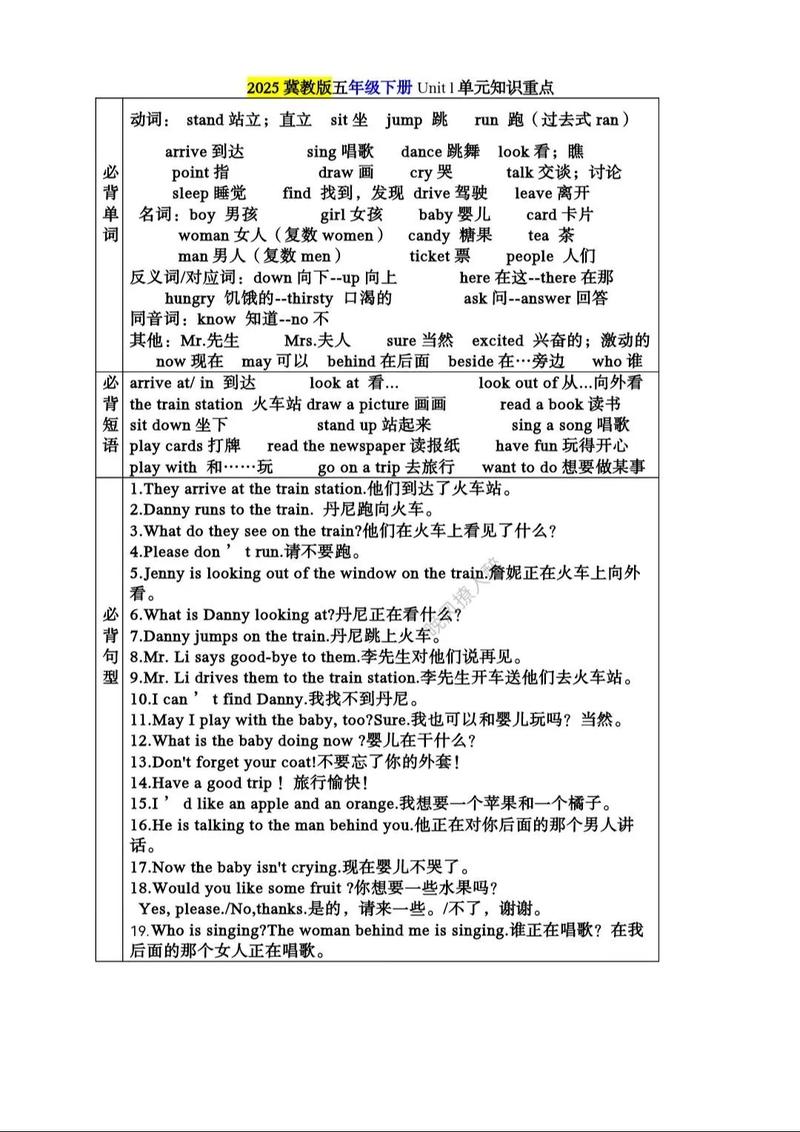
情态动词
can句型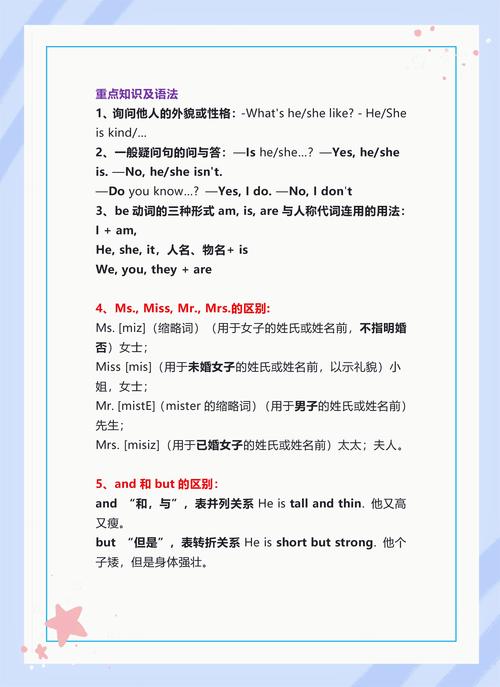 (图片来源网络,侵删)
- 肯定句:
I can swim./She can sing. - 否定句:
I can not swim./She can not sing.(缩写can't) - 一般疑问句:
Can you swim?/Can she sing? - 回答:
Yes, I can./No, I can't. - 特殊疑问句:
What can you do?
- 肯定句:
-
There be 句型 (表示“有”)
- 肯定句:
There is a book on the desk.(单数) /There are some books on the desk.(复数) - 否定句:
There isn't a book on the desk./There aren't any books on the desk. - 一般疑问句:
Is there a book on the desk?/Are there any books on the desk? - 特殊疑问句:
How many books are there on the desk?
- 肯定句:
重点语法
-
一般现在时
- 用法: 描述经常性、习惯性的动作或客观事实。
- 结构:
- 主语是
I/you/they/复数名词时,动词用原形。We play football every day. - 主语是
he/she/it/单数名词时,动词加s或es。He plays football every day.(以 o, s, x, ch, sh 结尾的动词加es, 如go->goes,watch->watches)
- 主语是
- 标志词:
always,usually,often,sometimes,every day/week...
-
现在进行时
- 用法: 描述说话时正在发生的动作。
- 结构:
am/is/are + 动词ing - 变化规则:
- 一般直接加
ing:read->reading,look->looking - 不发音的
e去掉加ing:make->making,write->writing - 重读闭音节结尾,双写末尾字母再加
ing:run->running,swim->swimming
- 一般直接加
- 标志词:
now,look,listen,at the moment
-
一般过去时
 (图片来源网络,侵删)
- 用法: 描述过去某个时间发生的动作或存在的状态。
- 结构:
动词过去式 - 过去式变化规则:
- 规则变化:
- 直接加
ed:watch->watched,play->played - 以
e只加d:like->liked,live->lived - 辅音字母
y变y为i再加ed:study->studied,fly->flew - 重读闭音节结尾,双写末尾字母再加
ed:stop->stopped
- 直接加
- 不规则变化: 需要单独记忆,如:
am/is->was,are->were,go->went,have->had,do->did,eat->ate,see->saw,read->read(发音 /red/)
- 规则变化:
- 标志词:
yesterday,last night/week/month/year...,...ago(如two days ago)
第三部分:听说读写专项技巧
听力
- 技巧:
- 提前审题: 快速浏览题目,猜测可能听到的内容。
- 抓关键词: 听到数字、人名、地点、动词等核心信息时,要特别留意。
- 听清问题: 问题是什么?是问
What,Where,When,Who,How还是Why? - 学会速记: 用简单的符号或字母快速记下关键信息,如
S代表Sarah,h代表home。 - 保持冷静: 遇到没听清的词不要慌,继续听下面的内容。
口语
- 技巧:
- 大声朗读: 每天坚持朗读课文和单词,培养语感。
- 模仿跟读: 模仿录音中的语音语调,注意单词的重音和句子的升降调。
- 敢于开口: 不要怕犯错,多和家人、同学用英语进行简单的对话。
- 描述身边事物: 看到什么东西,试着用英语描述它的颜色、大小、位置等。
This is a red apple. It's big and sweet.
阅读
- 技巧:
- 先看问题,再读短文: 带着问题去文章中找答案,提高阅读效率。
- 学会略读: 快速浏览文章,了解大意,不必逐字逐句翻译。
- 学会精读: 对于关键句子和问题相关的部分,要仔细阅读,理解其含义。
- 猜测词义: 遇到不认识的单词,可以根据上下文猜测它的意思。
- 注意时态: 判断文章描述的是经常性的事(一般现在时)还是正在发生的事(现在进行时)。
写作
- 技巧:
- 先审题,再构思: 明确写作要求,确定要写的人、事、物、时间、地点。
- 先说后写: 动笔前,先用口头的方式把句子组织好。
- 使用简单句: 从主谓宾结构的简单句开始,确保句子正确。
I like apples.He goes to school by bus. - 适当使用连接词: 尝试用
and,but,so等简单的连词把句子连接起来,使文章更连贯。 - 注意书写和标点: 书写工整,单词之间有空格,句子开头首字母大写,句末用正确的标点符号( 或 或 )。
- 写完后检查: 检查单词拼写是否正确、语法是否正确、句子是否通顺。
第四部分:复习计划与建议
- 制定计划: 将复习内容分成小块,每天复习1-2个模块,比如今天复习“食物”词汇和“一般现在时”,明天复习“家庭”词汇和“现在进行时”。
- 整理错题本: 把平时作业和测验中做错的题目抄下来,分析错误原因,定期回顾,确保不再犯同类错误。
- 多听多读: 利用碎片时间听英文歌、看简单的英文动画片(如《小猪佩奇》),营造英语环境。
- 家长配合: 家长可以和孩子玩一些英语游戏,你画我猜”、“单词接龙”,或者用英语进行简单的日常对话,增加趣味性。
- 劳逸结合: 复习要讲究效率,不要疲劳作战,学累了可以听听英文歌,放松一下。
请记住: 学习语言是一个循序渐进、不断积累的过程,保持积极的学习态度,每天坚持,就一定能取得进步!加油!