小学六年级英语教案通用模板
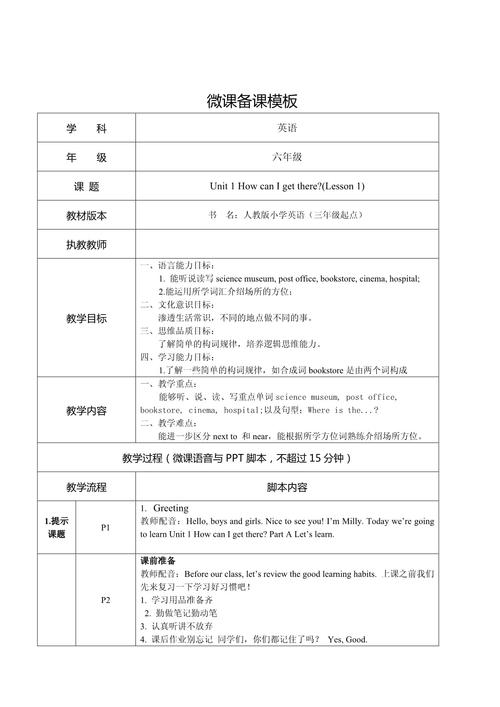
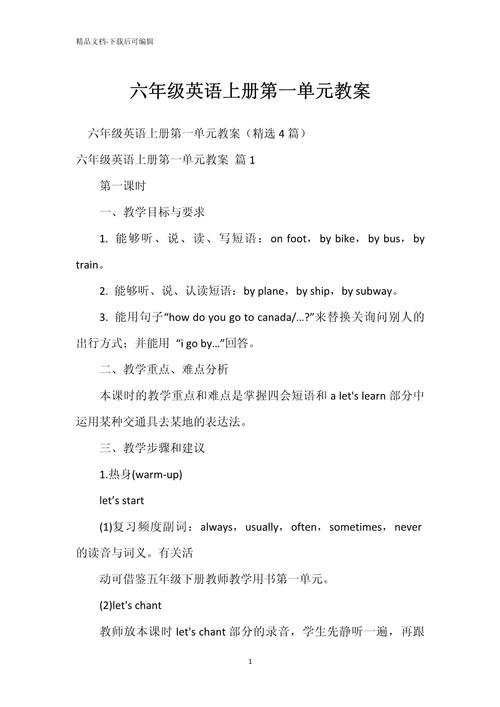
一份完整的教案通常包含以下几个部分:
(图片来源网络,侵删)
- 课题: Lesson X / Unit X Topic
- 课型: 新授课、复习课、练习课、阅读课等
- 教材分析: 本课在教材中的地位、作用以及与前后知识的联系。
- 学情分析: 六年级学生的认知特点、已有的知识基础、学习兴趣和习惯。
- 教学目标: 这是教案的核心,通常分为三个方面:
- 知识与技能目标: 学生能听、说、读、写哪些单词和句型;能理解和运用哪些语言功能。
- 过程与方法目标: 通过哪些活动(如游戏、小组合作、情景表演)来培养学生哪些能力(如合作能力、自主学习能力)。
- 情感态度与价值观目标: 培养学生学习英语的兴趣,了解中西方文化差异,形成积极的学习态度等。
- 教学重难点:
- 教学重点: 本课学生必须掌握的核心知识和技能。
- 教学难点: 学生在学习过程中可能遇到的困难或容易混淆的知识点。
- 教学准备: PPT课件、单词卡片、图片、音频、视频、实物等。
- 教学过程: 这是教案的主体,通常分为几个环节。
- Step 1: Warm-up & Lead-in (热身与导入): 活跃气氛,复习旧知,引出新课。
- Step 2: Presentation (新知呈现): 教授新单词和句型,通过直观、生动的方式让学生理解。
- Step 3: Practice (巩固练习): 设计不同层次的练习活动,让学生反复操练新知。
- Step 4: Production (拓展应用): 创设真实或接近真实的语境,让学生综合运用所学语言进行交际。
- Step 5: Summary & Homework (总结与作业): 回顾本课重点,布置有针对性的作业。
- 板书设计: 清晰、有条理地展示本课的核心内容。
- 教学反思: 课后对教学过程、效果、学生反馈等进行反思和总结。
教案范例
课题: Unit 3 What are you going to do? (第一课时) 课型: 新授课 教材分析: 本单元是围绕“未来计划”这一话题展开的,核心句型是 "What are you going to do? I'm going to...",本课时是单元的开篇,主要学习有关“计划”的词汇和核心句型的基本用法,为后续的对话和阅读学习奠定基础。 学情分析: 六年级学生已经具备了一定的英语基础,对一般将来时 "will" 有初步了解,他们求知欲强,乐于参与课堂活动,但部分学生在开口说英语方面仍有畏难情绪,教学中需要多创设情境,鼓励他们大胆表达。 教学目标:
- 知识与技能目标:
- 能听、说、读、写并运用以下动词短语:take a trip, go to the cinema, read a book, visit grandparents。
- 能听懂、会说、会读句型:What are you going to do? I'm going to... 并能在实际情景中运用。
- 过程与方法目标:
- 通过情景创设、小组合作、游戏等方式,引导学生在“做中学”,培养其自主学习和合作学习的能力。
- 学会运用所学句型询问并回答自己或他人的未来计划。
- 情感态度与价值观目标:
- 培养学生合理安排时间的意识,学会制定自己的周末或假期计划。
- 鼓励学生积极参与课堂活动,敢于开口,乐于与人交流。 教学重难点:
- 教学重点: 掌握四个动词短语的发音和意义,并能熟练运用核心句型进行问答。
- 教学难点: "be going to" 结构的正确使用,特别是 "be" 动词与主语人称的搭配。 教学准备: PPT课件、单词卡片、周末活动图片、音频、调查表格。 教学过程:
| 教学环节 | 教师活动 | 学生活动 | 设计意图 |
|---|---|---|---|
| Step 1: Warm-up & Lead-in (热身与导入) | Greetings: "Hello, boys and girls. How are you today?" Sing a song: "What are you doing?" (改编歌词,引出 "going to do") Brainstorm: T: "The weekend is coming. What do you usually do on the weekend?" (引导学生说出已学过的活动,如 play football, watch TV)。 |
Greet the teacher. Sing the song and do the actions. Answer the teacher's question. (e.g., I usually play football.) |
通过歌曲和头脑风暴活跃课堂气氛,复习旧知,自然地引出“未来计划”的话题。 |
| Step 2: Presentation (新知呈现) | Show a calendar: T points to Saturday and Sunday. "Look, it's the weekend. I have a plan. I'm going to see a film. What does 'see a film' mean?" Show the picture and teach the phrase go to the cinema. Teach other phrases: Use the same method to teach take a trip, read a book, visit grandparents. (Show pictures, play the audio, and ask students to repeat.) Present the key sentence: T asks a student: "Hello, [Student's name]. What are you going to do this weekend?" (板书句型) Guide the student to answer: "I'm going to..." (板书回答) * Explain the structure: be (am/is/are) + going to + verb (原形). |
Look at the calendar and listen to the teacher. Learn the new phrases by looking at pictures, listening to the audio, and repeating. Try to remember the meanings. Listen to the key sentence and try to understand its meaning. Observe the sentence structure on the blackboard. |
利用日历创设情境,使学习内容更贴近生活,通过图片、音频等直观方式呈现新词汇,降低学习难度,通过师生问答自然呈现核心句型,并初步揭示其语法结构。 |
| Step 3: Practice (巩固练习) | Game 1: Quick Response: Show the word cards quickly, students say the phrases as fast as they can. Game 2: What's Missing? Show four pictures, then cover one, ask students "What's missing?" Pair Work: T: "Now, work in pairs. Ask and answer like this: A: What are you going to do this weekend? B: I'm going to..." Walk around the classroom to offer help. |
Play the game and respond quickly. Play the game and try to remember the phrases. Work with their partner, ask and answer using the new sentence patterns. Encourage them to use the new phrases. |
通过游戏化的练习,让学生在轻松愉快的氛围中巩固新词汇,结对练习为学生提供了更多开口说英语的机会,有助于语言的内化和熟练运用。 |
| Step 4: Production (拓展应用) | Survey (Make a survey): T: "Let's make a survey about your classmates' weekend plans." Distribute the survey form. Show the example on the PPT: Ask 3 classmates and fill in the table. * Name |
Plan | --- * Lily |
| Step 5: Summary & Homework (总结与作业) | Summary: T: "What did we learn today?" (引导学生回顾本课所学的短语和句型,并一起朗读板书内容。) Homework: 必做: Copy the new phrases and sentences 3 times. * 选做: Interview your family members about their weekend plans and write down 3 sentences. |
Review the lesson with the teacher. Listen to the homework carefully. |
帮助学生梳理和巩固本课所学知识,分层作业设计能满足不同层次学生的需求,既保证了基础知识的掌握,又为学生提供了拓展和提升的空间。 |
板书设计:
                      Unit 3 What are you going to do?
      Phrases:                 Sentences:
      take a trip              What are you going to do?
      go to the cinema         I'm going to ...
      read a book
      visit grandparents
      (在旁边可以配上相应的简笔画)
教学反思:
- 本节课的设计层层递进,从热身到拓展,符合学生的认知规律。
- 游戏和调查活动极大地调动了学生的参与热情,课堂气氛活跃。
- 在Pair Work环节,部分内向的学生参与度不高,下次可以尝试分组讨论,降低个人发言的压力。
- "be going to" 的语法点只是初步呈现,在后续的课时中需要更系统地讲解和练习。
给教师的建议
- 趣味性: 六年级学生仍然喜欢游戏、歌曲、故事等,将知识点融入这些活动中,教学效果会更好。
- 情境化: 尽量创设真实或半真实的语言情境,让学生明白“在什么情况下使用这句话”,而不是孤立地学习句型。
- 互动性: 多设计师生互动、生生互动的环节,鼓励学生合作与交流。
- 分层教学: 关注学生的个体差异,在提问、练习和作业设计上体现层次性,让每个学生都能在原有基础上有所提高。
- 鼓励性: 多使用积极的、鼓励性的语言,建立学生的自信心,让他们敢于开口,乐于表达。
希望这份详细的教案模板和范例能对您的教学工作有所帮助!
(图片来源网络,侵删)