五年级是小学阶段英语学习的关键时期,承上启下,重点从基础的听说认读,逐步过渡到更系统的读写和语法知识学习,PEP教材(人民教育出版社与加拿大国际开发署合作编写)的设计非常科学,围绕学生熟悉的话题展开,螺旋式上升。
(图片来源网络,侵删)
整体概述
- 教材全称:义务教育教科书 英语(PEP)五年级上册
- 核心目标:
- 知识目标:掌握本册核心词汇、句型和主要语法点。
- 能力目标:能听懂、会说、认读所学内容,能进行简单的日常对话,能读懂简单的英文故事和短文,能根据图片或提示写出几句简单的话。
- 情感目标:培养学习英语的兴趣,乐于参与课堂活动,了解中西方文化差异,形成良好的学习习惯。
核心内容模块
五年级上册共分为 6个单元 和 2个复习单元。
单元主题
每个单元围绕一个与学生生活紧密相关的主题展开,通常包含 A, B, C 三个部分。
| 单元 | 主题 | 核心词汇 | 核心句型 |
|---|---|---|---|
| Unit 1 | What's he like? (他/她怎么样?) | 形容词: young, old, funny, kind, strict, polite, hard-working, helpful... | - Who's your ... teacher? - He/She is ... - Is he/she ...? Yes, he/she is. / No, he/she isn't. |
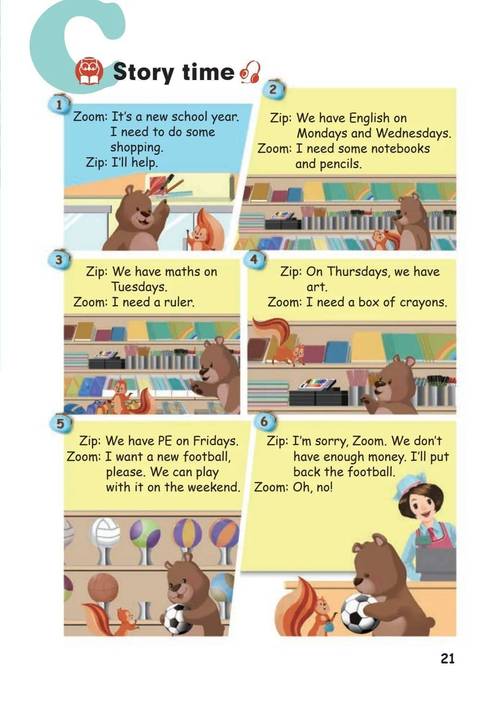
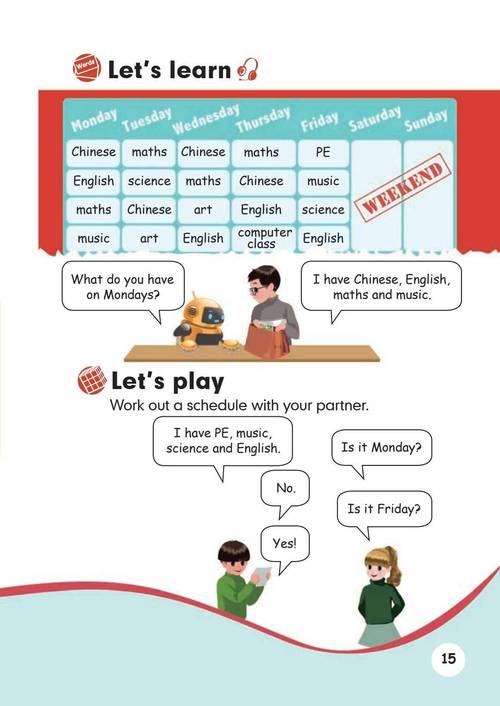
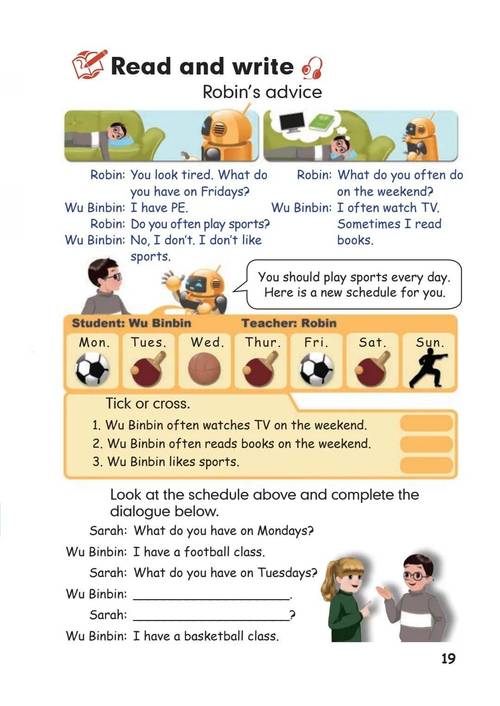
| Unit 2 | My week (我的一周) | 星期: Monday, Tuesday, Wednesday, Thursday, Friday, Saturday, Sunday 课程: Chinese, maths, English, music, science, PE, art 动词词组: do homework, read books, watch TV, wash clothes, play football... |
- What do you have on ...? - I have ... - Do you often ... on weekends? - Yes, I do. / No, I don't. |
| Unit 3 | What would you like? (你想要什么?) | 食物/饮料: tea, hamburger, sandwich, salad, ice cream, fresh fruit, ... 饮料: water, milk, juice, tea, Coke... |
- What would you like to eat/drink? - I'd like ... - Can I have ...? - Sure. Here you are. |
| Unit 4 | What can you do? (你会做什么?) | 动词词组: sing English songs, do kung fu, dance, draw cartoons, play the pipa, speak English... | - What can you do? - I can ... - Can you ...? - Yes, I can. / No, I can't. |
| Unit 5 | There is a big bed (有一张大床) | 房间/物品: house, room, kitchen, bedroom, bathroom, living room, bed, desk, table, phone, sofa, chair... | - There is a ... in the ... - I can see a ... - Where is ...? It's ... |
| Unit 6 | In a nature park (在自然公园里) | 自然景物: forest, river, lake, mountain, hill, tree, bridge, building, road, house... | - Is there a ... in the park? - Yes, there is. / No, there isn't. - Are there any ...? - Yes, there are. / No, there aren't. |
重点语法与句型
五年级上册的语法是整个小学阶段的重点和难点,需要重点掌握。
人称代词和物主代词
- 主格: I, you, he, she, it, we, they
- 宾格: me, you, him, her, it, us, them
- 物主代词:
- 形容词性物主代词: my, your, his, her, its, our, their (后面必须跟名词,如: my book)
- 名词性物主代词: mine, yours, his, hers, its, ours, theirs (后面不跟名词,单独使用,如: This book is mine.)
be 动词的用法
- am: 用于第一人称单数 I 后面。
- is: 用于第三人称单数,即 he, she, it 或单个的人名/事物后面。
- are: 用于第二人称 you 和复数 we, they 后面。
- 口诀:我用am,你用are,is连着他她它。
情态动词 can 的用法
can+ 动词原形,表示“能,会”做某事。- 肯定句: I can sing. (我会唱歌。)
- 否定句: I can't (cannot) sing. (我不会唱歌。)
- 一般疑问句: Can you sing? (你会唱歌吗?)
- 肯定回答: Yes, I can.
- 否定回答: No, I can't.
名词单复数
- 规则变化:
- 一般情况加
-s: book → books, dog → dogs - 以 s, x, ch, sh 结尾加
-es: bus → buses, box → boxes, watch → watches - 以“辅音字母+y”变 y 为 i 再加
-es: family → families, baby → babies - 以 f 或 fe 变 f 或 fe 为 v 再加
-es: leaf → leaves, wolf → wolves
- 一般情况加
- 不规则变化: child → children, mouse → mice, man → men, woman → women, foot → feet
- 不可数名词: water, juice, milk, tea, bread, rice 等,通常没有复数形式,不能用 a/an 修饰,表示数量时要用 "a bottle of / a cup of" 等。
There be 句型 (There is / There are)
这是五年级最重要的语法点之一,表示“某地存在某物”。
(图片来源网络,侵删)
- There is a ... + 单数名词 / 不可数名词 + 地点.
- 例: There is a cat in the box. (盒子里有一只猫。)
- 例: There is some water in the bottle. (瓶子里有一些水。)
- There are some ... + 复数名词 + 地点.
例: There are some books on the desk. (桌子上有一些书。)
- 就近原则: be 动词的形式由它后面的名词决定。
- There is a book and two pens on the desk. (desk 后是单数 book,所以用 is)
- There are two pens and a book on the desk. (desk 后是复数 pens,所以用 are)
- 一般疑问句: Be 动词 提前。
Is there a ...? / Are there any ...?
- 否定句: be 动词后加
not。There isn't a ... / There aren't any ...
学习建议
-
词汇为王,每天坚持:
 (图片来源网络,侵删)
- 利用单词卡片、App(如百词斩)等多种方式,每天记几个新单词,并复习旧单词。
- 把单词放到句子和课文中去记,而不是孤立地背。
-
课文是骨架,必须熟读:
- 大声朗读课文,模仿录音的语音语调,培养语感。
- 尝试背诵重点对话和句型,这能极大地提高口语和写作能力。
-
语法是工具,理解会用:
- 不要死记硬背语法规则,通过大量的例句去感受和理解。
- 做一些针对性的练习题,巩固语法知识,特别是
There be句型和can的用法。
-
听说领先,读写跟上:
- 听: 多听课本配套录音、简单的英文儿歌或故事。
- 说: 积极参与课堂活动,和同学、家人用学过的句子进行简单对话。
- 读: 课本上的对话、小短文都要读熟,可以尝试阅读一些简单的英文绘本。
- 写: 从抄写单词和句子开始,然后尝试根据图片或提示,用学过的词汇和句型写几句话,如写一篇关于 "My Week" 的小短文。
-
培养兴趣,保持热情:
看一些简单的英文动画片(如《小猪佩奇》),学唱英文歌,让英语学习变得有趣。
希望这份详细的解读能帮助你更好地了解和使用 PEP 小学英语五年级上册教材!